

In an invited review article out this week, Dr. Robyn Crook discusses recent progress in cephalopod welfare and husbandry, and outlines a strategy for engaging the public and other stakeholders in discussions of cephalopod use in research, regulatory oversight, and cephalopod welfare. Social license to operate (SLO) is a conceptual framework for examining how a given activity or industry is perceived and evaluated by external observers, whether they have a material interest in the activity or not. This framework has been applied already to commercial aquaculture, where interest in cephalopods is growing, and recreational animal use, including fishing. The application of this well-validated framework to cephalopod research can help structure joint effort from researchers to work to improve animal welfare and community engagement with our science at the same time. This article is currently paywalled and only available as an accepted proof, but will come out in an upcoming, cephalopod-themed special issue of Integrative and Comparative Biology.
Congratulations Rachel!

Rachel defended her MS thesis today, titled “Neural control of quadrupedal walking in the flamboyant cuttlefish, Metasepia pfefferi”. Rachel’s project used video analysis and Deep Lab Cut to characterize the walking gait of metasepia, which is the only cephalopod genus to perform coordinated stepping using front arms and ventral papilla. Her work sheds new light on the organization of neural circuits for locomotion in cephalopods, and opens several new lines of study in these interesting and relatively under-studied animals.
During her time in the lab Rachel also worked on a project examining anesthesia and analgesia in cephalopods, which was published earlier this year. We are working on a manuscript describing her work on M. pfefferi and hope to see that published soon.
Rachel is applying for PhD programs in the upcoming 23/24 cycle, and we expect her to go on to exciting things! Congratulations Rachel!
Congratulations Abbi!

Abbi Koenigsmark defended her MS thesis this week, titled “Sex Differences in the Agonistic Behavior of the Stumpy-Spined Cuttlefish Sepia bandensis (Mollusca: Cephalopoda). Abbi’s work shows that both male and female cuttlefish engage in agonistic displays to conspecifics, and that both sexes use a color pattern that has previously been considered to be male-only. Her work sheds new light on the complex intraspecific communication that occurs in cephalopods, and is one of the few studies of interactions that attempts to manipulate chromatophore function to examine signal fidelity.
During her MS degree Abbi also worked on another project, looking at baseline sex differences in nociceptive thresholds in Euprymna berryi, adding to her interest in sex-specific behavior. We expect that both of these projects will lead to publications soon.
Abbi is heading off to a PhD in Neuroscience at the University of Oregon, where she hopes to work on the octopus visual system. Congratulations Abbi!

Abbi celebrates her successful thesis defense! L-R Robyn Crook, Abbi Koenigsmark, Rachel Parsons, Gabby Bostwick, Sarah Detmering
Crook Lab at the CoSE Showcase

DIana with her poster, and Rachel and Abbi offering support and encouragement!
Diana Neacsu presented her poster on the connectome of the octopus arm at the annual SFSU College of Science and Engineering Showcase. Diana’s work focuses on a large-scale reconstruction of the axons and glial cells in the octopus arm nerve cord and the auxiliary neural structures that underlie sensation and movement. The CoSE showcase is an excellent opportunity for students to present work in progress and show the larger university community the work we do. Great job Diana!
New Publication: Ecology and evolution in a model of persistent pain

A new Perspective article was published this week in Nature Reviews Neuroscience by PI Robyn Crook, along with Ben Seymour (Oxford University) and Zhe Sage Chen (NYU), titled “Post-injury pain and behavior: a control theory perspective”. In this Perspective, we propose a control-theoretic framework to explain the adaptive processes in the brain that drive physiological post-injury behavior. We set out an evolutionary and ethological view on how animals respond to injury, illustrating how the behavioral state associated with persistent pain and recuperation may be just as important as phasic pain in ensuring survival.
This provocative and original approach to thinking about chronic and persistent pain as processes arising from natural selection rather than as a disease state, is likely to generate new lines of enquiry and ways of thinking about management of pain in humans and other animals.
Announcing the inaugural Cephalopod Neurobiology conference, April 17th-21st 2024, MBL

We are pleased to announce the first ever Cephalopod Neuroscience Conference!
April 17-21, 2024, MBL, Woods Hole, MA USA
https://sites.google.com/view/cephneuro/
Get on the mailing list: https://forms.gle/qWfaUTJL4aS4RazM6
Supported by a conference grant from the Simons Collaboration on the Global Brain, and the Frontiers Group of the Allen Foundation.
The organizing committee consists of Cristopher Niell (U Oregon) Caroline Albertin (MBL), Robyn Crook (SFSU) Mandë Holford (CUNY), Joshua Rosenthal (MBL), Simon Sprecher (U. Fribourg), and Paul Katz (U Mass Amherst.
New publication: analgesia and anesthesia in Euprymna berryi
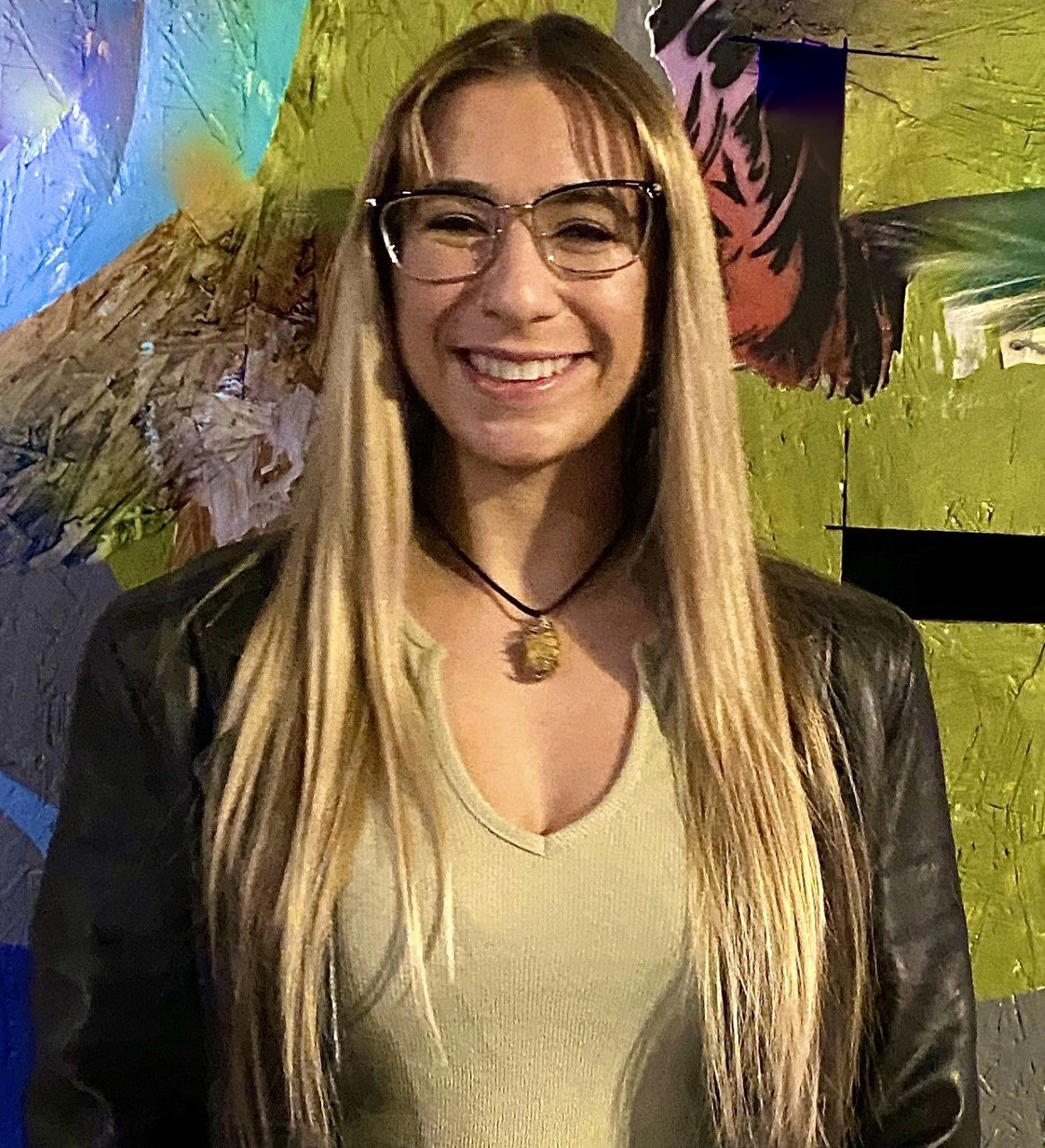
Skyler Deutsch, first author on Deutsch et al., 2023
The lab’s latest paper is published this week in a Special Issue of the journal Biology, “ Anesthetics and analgesics used in aquatic animals”. The study, titled “Evaluation of Candidates for Systemic Analgesia and General Anesthesia in the Emerging Model Cephalopod, Euprymna berryi” provides the first evidence that analgesic drugs from several different drug classes have effects on nociception and pain-like behavior in cephalopods. This work was led by Skyler Deutsch, who was a post-bac researcher in the lab for year, supported by an NSF REPS supplement to the lab. In addition, two of our MS students, four SFSU undergrads, one of our summer REU students, and both our research technician and postdoc, all contributed data to this important and comprehensive study.
Currently there is significant discussion about the welfare of cephalopods in research labs and aquariums, but one constant in these conversations is the lack of information about what interventions are effective for promoting and enhancing welfare for cephalopods, given their physiological and behavioral differences from vertebrate animals. With this study, we provide the first clear evidence that systemic analgesics can reduce sensitivity and pain-like behavior, and we also show that general anesthesia can be performed safely and reliably in this species.
Euprymna berryi is growing rapidly as a newly-emerging model animal in neuroscience and behavior, and we anticipate that this study will encourage and support further evaluation of welfare-promoting interventions for this and other species of cephalopods.
PI Robyn Crook quoted in the Boston Globe

The Boston Globe quotes Robyn Crook on cephalopod research and welfare
A new story in the Boston Globe by David Abel covers the growing efforts to provide federal-level research protection for cephalopods. This controversial subject rests on determinations of cephalopod sentience, intelligence and capacity for affective state, all of which suggest regulation of research on cephalopods is warranted. This article focuses on the cephalopod breeding and research efforts at the Marine Biological Laboratory in Woods Hole, MA, where our laboratory brood-stock originates. The Crook Lab upholds the highest standards of welfare and husbandry for the cephalopods we use in our studies, and our work on applied welfare-based questions has become a touchstone for regulatory efforts in other nations. Our aim is to support the ongoing discussions of cephalopod regulation and welfare with well designed studies, to improve the lives of cephalopods in research, fisheries and display. It is great to see ongoing public-facing discourse on this important topic.
The Crook Lab at SICB 2023
Members of the Crook Lab presented their work at the Society for Integrative and Comparative Biology Annual Meeting in Austin Texas, from Jan 2-8.
Sarah Detmering (our research technician) presented a poster on analgesia and anesthesia in our main lab model species, Euprymn berryi. This important work on welfare and refinement has been submitted for publication and we hope to see it out soon! Abbi Koenigsmark (MS 2023) presented her NSF-funded work on injury and male contest behavior in Sepia bandensis, and Rachel Parsons (MS 2023) presented her Allen Foundation-funded work on oscillatory locomotion in Metasepia pfefferi. Chris Seng (MS 2024) presented his NSF-funded work on pre- and post-synaptic plasticity in E. berryi after early-life injury, and our newest MS student, Diana Neacsu, attended to gain experience with networking and scientific presentations. SICB is a great meeting and all the Crook Lab members did a great job showing the excellent projects they are working on.

L-R: Sarah Detmering, Diana Neacsu, Chris Seng, Abbi Koenigsmark, Rachel Parsons

Abbi presents a talk on the effects of injury on male contest behavior

Rachel presents her work on oscillatory locomotion in M. pfefferi

Chris presents his talk on mechanisms of injury-induced plasticity in the PNS of E. berryi

Sarah presents a poster on analgesia in E. berryi
New paper in Trends in Neurosciences: Evolution of nociceptor hyperexcitability

Fig. 3 Fitness consequences of persistent nociceptor hyperexcitability
Crook Lab PI Robyn Crook coauthored a new review article in Trends In Neurosciences, titled “Persistent nociceptor hyperactivity as a painful evolutionary adaptation” discussing the evolution and selection of neural mechanisms of long-lasting injury-induced changes to behavior. In this paper, which arose from a panel discussion at the Gulf Coast Pain Consortium in 2021, a group of prominent pain scientists describe new findings on the way in which nociceptor hyper-excitability may have provided selective advantage in wide-ranging species over the course of evolution, leading to a pre-disposition toward chronic pain in humans. We hope this comprehensive review article will add to the growing body of literature that considers some cases of long-lasting and chronic pain as not necessarily evidence of disease states, but instead as normal, adaptive functions of the nervous system.
New preprint posted: Somatotopy and calcium imaging in squid

Somatotopy of mechanosensory neurons in the stellate ganglion of the squid. ©CrookLab
A new manuscript from the lab was posted this week on Biorxiv, the preprint server for Biology, titled “Somatotopic organization of mechanosensory afferents in the stellate ganglion of the squid, Euprymna”. This study describes the first clear evidence for somatotopic arrangement of sensory neuronal cell bodies in a cephalopod ganglion, and describes also the first published report of live calcium imaging of mechanosensory activity in cephalopods. Cephalopod neurons have been exceptionally hard to characterize with standard electrophysiology techniques due to their small size. In this study, calcium dye injected into the stellate ganglion in situ allows for observation of firing of individual neurons in response to touch on distinct areas of the mantle, which is innervated by the stellar nerves emanating from the ganglion. Along with retrograde tracing from individual stellar nerves, the live calcium imaging data demonstrates clear somatotopy of mechanosensory neuron cell bodies in the stellate ganglion. This is the first functional evidence for somatotopy in any cephalopod and the first identification of a neuronal subtype through functional imaging. Funding to our lab from the Frontiers Group of the Allen Foundation is allowing our lab to continue to refine these techniques, to apply to octopus arms and other neuronal tissues.
Here come the connectome datasets!
One of the most exciting (and daunting!) projects we proposed to the Allen Foundation was to reconstruct the connectome of the octopus arm and sucker ganglia. The first stage in this enormous project is to acquire the 3D-EM dataset, which is being collected for us by the expert imaging team at the Cleveland Clinic. We’re collecting complementary datasets at multiple resolutions, to build a complete picture of the gross, three-dimensional anatomy of the ganglia, to trace individual fibers as they pass through from the arm ganglion into the sucker ganglion, and to reconstruct complete dendritic arbors of different types of neurons in the main arm ganglion. This low-resolution “atlas” dataset is shown here at 10% of its actual resolution, but cells, tracts, blood vessels and other features are clearly visible. We are incredibly excited to start recruiting SFSU undergrads to work on creating a ground-truth dataset of manually-traced cells, and we’re immensely thankful to the Frontiers Group of the Allen Foundation for supporting the acquisition and analysis of these incredible datasets. We expect to make these datasets freely available once we’ve performed the initial analysis.
Crook Lab work featured in The New York Times

The lab’s recent research on behavior and neurobiology of cephalopod pain experience was featured in an article in the New York Times this week, along with quotes from PI Robyn Crook. The article describes the regulatory landscape for invertebrate animals used in research laboratories in the USA and across the globe. The critically important issue of invertebrate sentience and welfare has generated considerable interest in the past several years, and it is encouraging to see that our ongoing work on welfare and technique refinements for cephalopods is having a significant impact on these discussions.
PI Robyn Crook quoted on insect pain

This week, journalist Katarina Zimmer published an outstanding and detailed report in Undark magazine on the ethics of using insects in research, agriculture and food production. Recent studies suggest bees have affective states similar to pain, and closely paralleling the findings from our own lab on pain experience in octopuses. PI Robyn Crook was quoted in the article discussing the regulatory and welfare landscape for invertebrate animals used in research, and the possibility that pain and suffering may be widespread capabilities of diverse brains, not just those of vertebrate animals.
Welcome REU students Jonathan and Connor!

Connor Squellati, REU student

Jonathan Shia, REU student
SFSU Biology’s REU program is back in person this year and the lab is delighted to welcome Connor Squellati from Pomona College and Jonathan Shia from Northeastern to the lab for the summer.
Jonathan comes to us via the MBL’s cephalopod initiative, where he has been working as a husbandry intern for the past semester. He’ll be working on a project to measure peripheral nerve activity in cephalopods in the presence and absence of putative analgesics. He’ll be supported by a team of Skyler and Chris - Skyler’s behavioral work on analgesia provides the background for his study, and Chris’s electrophysiological expertise provides the practical training in the skillset he’ll be developing here.
Connor’s main interest is in the molecular biology and genetics of nociception and plasticity in cephalopods. He’ll be conducting a study looking at expression of nociceptor-specific channels and other molecular markers in octopus and squid tissue. Connor will be working alongside Gabby, who brings years of experience in bioinformatics, molecular techniques and in-situ hybridization to the lab.
In addition, they’ll be taking part in the regular REU professional development activities and obtaining a certificate in coding by working alongside Rachel, who is using the Python-based program Deep Lab Cut to analyze the walking kinematics of her flamboyant cuttlefish.
We wish them a busy, productive and enjoyable summer!
New Publication: Neurobiology of senescence in Giant Pacific Octopus

Giant Pacific Octopus, Enteroctopus dofleini, at the Aquarium of the Bay in San Francisco. ©Meghan Holst
Congratulations to first author Meghan Holst, whose MS thesis work is published this week in the Journal of Comparative Biochemistry and Physiology Part A. Her paper, titled “Behavioral changes in senescent giant Pacific octopus (Enteroctopus dofleini) are associated with peripheral neural degeneration and loss of epithelial tissue” is the culmination of a large multi-site study of GPOs in public aquaria in the USA.
In this paper, Meghan shows that GPOs experience significant changes to sensory physiology beginning early in the reproductive period - far earlier than we appreciated previously - and that the peripheral nervous system degenerates significantly as neuronal cells fail to regenerate toward end of life. Her study raises important new questions about the welfare of octopuses during the terminal senescence phase, as well as interesting new mechanistic questions about how the peripheral nervous system degenerates during aging in cephalopods.
Our hope is that this and future studies of senescence in octopus will lead to ongoing refinements in management in public aquaria and in research laboratories.
Crook Lab research featured in Ed Yong's book, "An Immense World"

Several years ago Crook Lab PI Robyn Crook gave an interview to The Atlantic’s science journalist Ed Yong, as he was touring the country developing material for his forthcoming book. That book, titled “An Immense World” describes the many ways animals sense and make sense of their worlds and came out this week.
In a chapter dedicated to pain, the Crook Lab’s work on octopus and squid is featured along with comments on the challenges of pain research by Robyn Crook.
The book is a fantastic read from start from finish, and it’s a privilege and a delight to see our work featured in such an engaging and detailed way.
Congratulations Skyler, Chris and Alyssa!

Skyler and Chris receiving their award
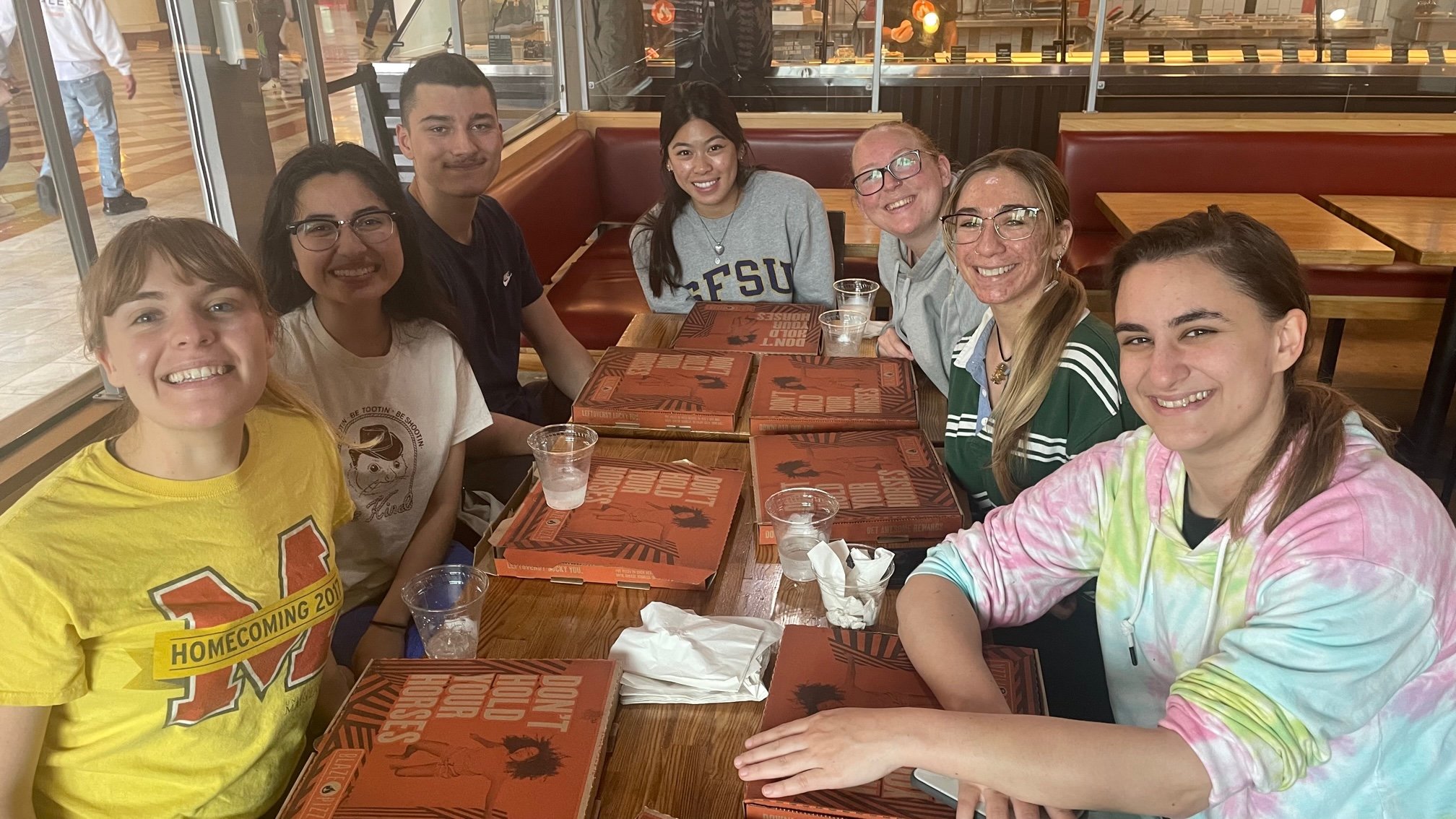
Celebratory pizza lunch!
Skyler Deutsch, Alyssa Ng and Chris Seng won second place in the Graduate Division of the poster competition at the CoSE Showcase on May 3rd, 2022, for their poster titled “Analgesics for improved welfare of Hummingbird bobtail squid, Euprymna berryi”.
This is an outstanding effort from all three team members given that none of them are currently graduate students (Skyler is a post-bac, Alyssa and Chris are undergrads; they competed in the grad division because Skyler, the team leader, is ineligible to be in the undergrad competition). Skyler has been leading this project for a little over six months and to beat out all but one other team of graduate students is an amazing achievement. Congratulations Skyler and team!
The Crook Lab at the SFSU CoSE showcase

Megan Manahan (BS Physiology) and Rachel Parsons (MS P&B) present their poster describing anesthesia in E. berryi

Skyler Deutsch (NSF REPS post-bacc) and Alyssa Ng (BS Physiology) present their poster on analgesia in E. berryi

Chris Seng (incoming MS P&B) presents his work on changes in inhibitory tone after injury in E. berryi

Abbi Koenigsmark (MS P&B) presents her team’s work on sex differences in nociceptive thresholds in E. berryi

The whole Crook Lab presenting team! (L-R): Megan, Alyssa, Ingrid, Jackie, Skyler, Chris, Abbi and Rachel.
After a two-year hiatus due to COVID-19, the SFSU CoSE Research Showcase is back! The Crook Lab presented four posters on different aspects of our work, with a total of ten students sharing authorship of the different posters. We presented work in progress on both major research streams in the lab; two posters focused on welfare-related questions of anesthesia and analgesia, and two posters on the basic neurobiology of nociception in Euprymna berryi. It’s been an incredibly productive and busy semester for all the lab’s students, and it’s great to see these projects presented to our campus audience.
Research on the SFSU campus continues to be a vitally important aspect of our students’ education, and our ability to engage our students in cutting edge neuroscience research is a great strength of the Department of Biology and the College of Science and Engineering. We look forward to sending these projects out for publication soon!
PI Robyn Crook discusses nociceptor evolution on Pain Beat Podcast

The Pain Beat podcast covers a wide range of topics related to the study and treatment of pain. In the most recent episode (Episode 11), Dr. Robyn Crook and four other leading pain researchers discuss the evolution of nociception and pain, whether nociceptors are the archetypal sensory neuron, and whether chronic pain is adaptive or maladaptive. This podcast is a live recording of a panel discussion at the Gulf Coast Pain Consortium meeting, where clinicians and basic researchers convene to discuss new ways to approach pain treatment. As evolutionary and comparative perspectives on prolonged and chronic pain gain traction, our hope is that broader understanding of the diversity of pain states among different animals will lead to improvements not only in human health, but in the treatment and prevention of pain in all animal species.